Star Wars: Outlaws

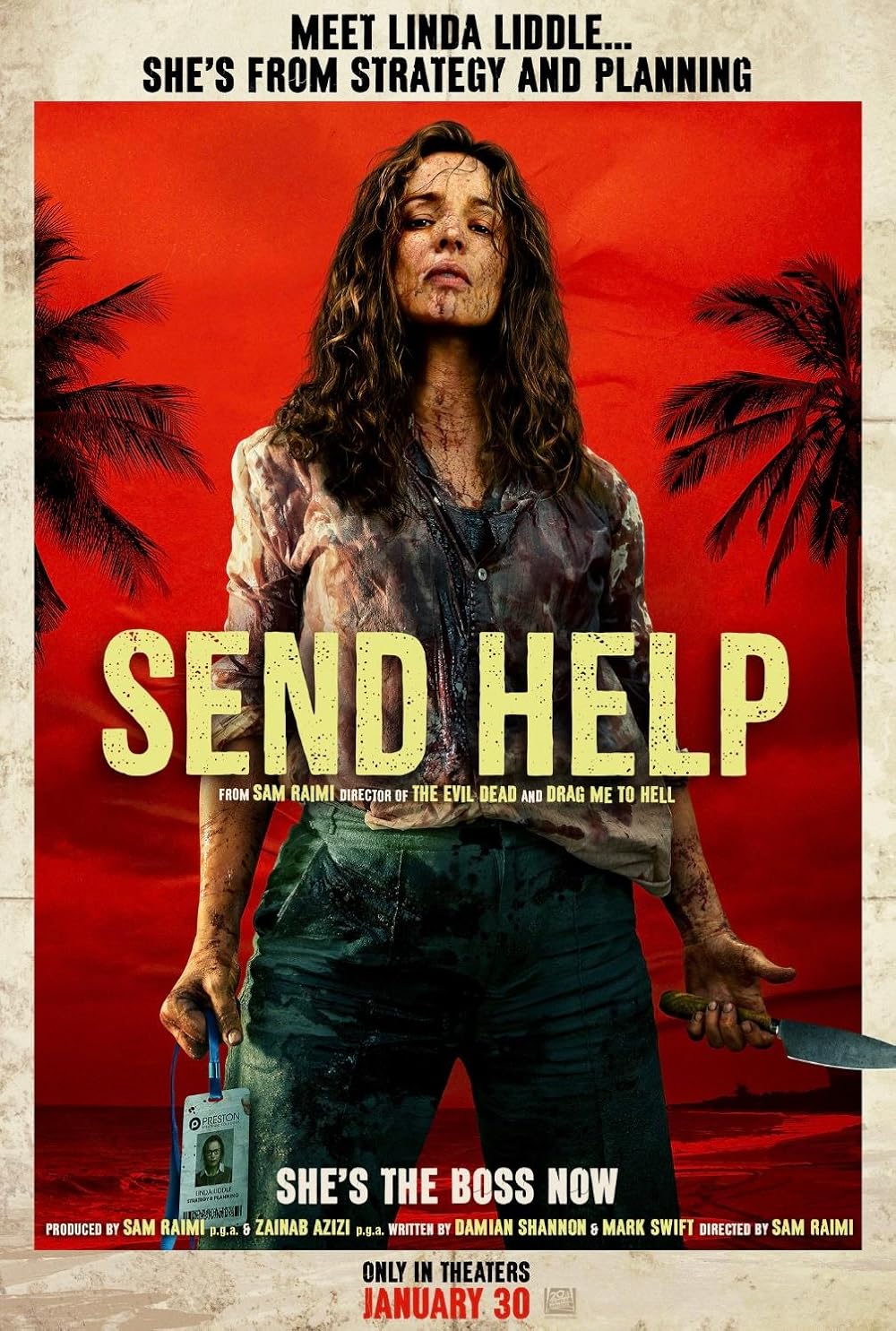
Star Wars: Outlaws is basically like if you took the serious parts of modern Grand Theft Auto games, and instead of ratcheting them up to 15[1], you replace the main character with someone likeable, who doesn’t just go around murdering anyone who gets in the way, and also the setting is, you know, familiar.

It’s like this. You are Kay Vess, a mostly orphaned thief and slicer who lives in Canto Bight[2] along with her pet… whatever he is, Nix, during the years around the height of the civil war between the Empire and the growing Rebel Alliance. After a medium-sized tutorial section in which you learn how to bet on fixed horse races, pick pockets, and climb around, you are asked to join a heist of the vault of a rich local crimelord. Only, things go sideways, and before you know it, you’re on the run, trying to clear a pretty astonishing bounty from your head, and learning how to freelance in a world galaxy full of criminal syndicates, not to mention the Empire and those pesky rebels.

I did not find everything, despite my best efforts. That said, I think I could pretty easily find everything? With a walkthrough, I mean. Because the stuff I’m missing is clearly identified. It wouldn’t be like finding all the damn koroks, for instance. But there’s really a lot to do. In addition to the main quest and various side quests, both to work with syndicates and to find people who will train you to unlock special powers, there’s lots of driving around on speeders, lots of flying around in space, lots of sneaking around in armed fortresses, lots of shootouts with bad guys, lots of Kay refusing to do anything unless there’s a paycheck in it for her, and even the most adorable mini games you’ve ever seen in which Kay and Nix eat dinner at various street cafes on various worlds.

I cannot imagine anyone ever having enjoyed an open world sandbox game about crime and not enjoying this open world sandbox game about crime, is I guess my bottom line.

Well. Unless you play open world sandbox games about crime because you really deeply identify with criminals in your actual life and wish more games would let you shoot prostitutes to retrieve your money that you spent on them a few minutes ago, I guess. I am sadly certain that demographic exists.

But if you’re anyone else, see above. And I haven’t even mentioned the part where this is maybe the best treatment of how droids exist in a galaxy far far away. Definitely top three.

[1] on a scale of 10, natch. (Here I am describing Saints Row)
[2] which you will not recognize as the casino city from The Last Jedi

The Innocents (1961)

I have a better than usual reason for not remembering the podcast categories, I mean aside from how I watched the movie days ago and have not yet reviewed it. See, their style was 1960s, okay, sure, but their scare was wildcard, which functionally means “pick a horror movie from the 1960s.” And they did!, but you can see why that would be hard to explicitly remember.

Anyway, the movie they settled on (from a group of 6 and then selected randomly) was The Innocents, a Victorian era ghost story[1] based we think on Henry Miller’s The Turn of the Screw, a book I nearly read once. I wonder if in 1961 a movie with a Victorian setting would have been considered a period piece, or if that bit of genre definition did not yet exist.

A nanny, or “governess” as the British would have us believe, is hired to nannify two orphaned children on a massive English estate off in the countryside, because the uncle who inherited them has no interest in children. So off she goes, to find a mostly empty house except for the cook and the maid and the daughter and, before long, the son. Only, there are weird sounds and musics and people up on the tower who shouldn’t be there, and before long the nanny thinks there might be ghosts around.

And then before much longer than that, she thinks the children might be possessed. And then, it’s time for a spoiler cut, because stopping here would be extremely unsatisfying for me, but reading further could potentially be unsatisfying for you.

[1] maybe?

Continue reading

El Karate, el Colt y el Impostor

On a dare, I watched a drive-in movie from exactly 50 years ago starring Lee Van Cleef and Not Bruce Lee[1], called The Stranger and the Gunfighter. I think the country of origin must have been Spain, based on the original language of the title and where it was filmed, but a case can still be made for Italian, and not just because of the director or the purported genre. Anyway, you have not seen this movie and will not see this movie, so I’ll break it down. You have been warned.

Lee Van Cleef is a thief everyone seems to know and like, except for the law in Monterrey, who aim to hang him for the crimes of a) blowing up a safe in the bank, b) killing the safe’s owner (Wang[2]) in the explosion, and c) making off with his fortune. The problem is, he b) tried to convince the owner not to run toward the lit dynamite, and c) there was no fortune, just pictures of four ladies in various states of bedroom [un]dress, and an old fortune cookie. (He has no real defense for a), that one happened.)

Meanwhile, Wang’s nephew and his whole family are in trouble in China because Wang stole the local warlord’s money instead of using it in America to make everyone rich. But the nephew is a Kung Fu master, so the warlord lets him go investigate. He arrives before LVC is hung, and they come to a common arrangement, which is to follow the instructions on the fortune cookie and closely examine the asses of the four women, which will lead them to Wang’s treasure, if you know what I mean, and I think you do.

The women are as follows: a horny American Christian, a Russian whore, an Italian musician (she plays a stringed instrument I did not recognize per se), and a Chinese laundress. It’s basically a GI Joe fetch quest, with the part of Cobra being played by an evil preacher who had previously been involved with the horny American, but abandoned her at the first whiff of a treasure.

If this all sounds pretty hilarious, a) I’m doing my job, and b) it’s actually funnier than you think it is. Eventually, they solve all the issues, see all the asses, and find the treasure, yay[3]! So if you ever liked a Lee Van Cleef movie, or if Kung Fu Westerns sound great, or especially if you do not have enough images of Chinese men examining buttocks through a jeweler’s lens burned into your memory, and also if you have a lot of booze? This is the movie for you!

[1] I mean, nowhere near Bruce Lee. You ain’t gonna be fooled, and you wouldn’t have been then either. I just think that the Italian director considered him to be as Bruce Lee as they could afford.
[2] I have high confidence this name was chosen purely so people would snicker in a culturally inappropriate manner
[3] The real treasure was the asses they met along the way

Le Pacte des Loups

I legitimately miss having a few movies in a row that I’ve already seen, before needing to watch another new one [for the podcast]. Like, I don’t want this to turn into a chore. Even if I alternated seen it / didn’t see it? That would be better. Or then again, maybe I’m just tired of my phone’s hard drive being full. That would make sense. Or also then again, maybe I just don’t like feeling like I haven’t seen enough horror movies. Even though I objectively have not. Just, usually the knowledge is not so in my face.

Anyway.

This week’s movie (from January 2022 I think) was in the scare of a creepy town and in the style of French. Brotherhood of the Wolf is set in 18th C France, prior to troubles they had as that century wound down. Out in the countryside, a wolf has been terrorizing the populace, as have the King’s men sent to stop it. Into this situation rides a marquis and his Mohawk companion, fresh from the French and Indian War, which I bet was called something else by France. (Impossible to know, really.)

Naturally they are invited to the local lord’s manor, where they meet all the relevant people. The lord, his one-armed son[1], the fetching redhead who I thought was his daughter but later decided might not have been after all, the narrator, and Monica Bellucci. Having done that, they proceed to work on solving the wolf problem, but run afoul of various obstacles, such as the King’s wounded pride, noble savage tropes, and aforementioned fetching redheads.

Honestly, it was fine and for sure would have been better instead of worse if I’d watched it in a row, plus also possibly if I’d watched it subtitled instead of dubbed. But even with those caveats, it was only fine. The thing that will stick with me is nothing in the plot or the humor[2], but the treatment of the Mohawk companion. The marquis tells his (the marquis’) story to someone, and I’m betting it was the redhead, about how his commanding officer had murdered the entire tribe with smallpox blankets, and this led the marquis to help the lone survivor kill his (still the marquis’) whole platoon and then run off back to France as best buds, and, look. This movie was made in 2001, and I’m glad that by then people were secure enough in the idea that genocide is bad to use it as a tool to demonstrate how someone is heroic when he opposes it. Cool.

But at the same time, 2001 is closer to 2026 than it is to when Moby Dick was published, so maybe leaning so hard on the noble savage thing is something we could also have already outgrown by then? Especially when you mix it with a spoiler that was first originated in comics, if you know what I mean, and maybe you do, at that.

[1] There was a whole tragic backstory, which I forgot by accidentally watching this movie spread out over the course of nearly a week
[2] It was definitely funny now and then, enough so to call it out even

The Mandalorian and Grogu

My father is somehow turning 80 in a few days, and he wanted to see Martin Scorsese’s latest movie on opening weekend, which solved my problem of having no idea how I’d manage such a feat. I mean, not even “on opening weekend”, just at all during the theatrical run. So we headed from his place to Weatherford, well known cinema mecca of the DFW metropolitan area, and saw The Mandalorian and Grogu.

If you have not been sleeping under a rock since before Covid, you’ll be aware of the biggest Star Wars TV show, starring Pedro Pascal and Baby Yoda as a Mandalorian bounty hunter and a 50 year old Jedi youngling on the run from the Empire, among other varied adventures, in the years after the fall of the Emperor. This movie is that, but as a movie. Since I like the show, I will not say I wish I was joking, but… yeah, seriously, this felt like 4 episodes of a TV show rejiggered to be a movie instead. And I honestly hope it worked for them, because Star Wars should be movies, in virtually all[1] cases.

I cannot imagine really anyone in the world who would be swayed on whether to see this based on plot specifics, but in case you care: The Mandalorian and his bounty hunting apprentice are hunting bounties for the New Republic, and the most elusive bounty in their card deck of Imperial baddies is known to the Hutts. Unsurprisingly, the Hutts are happy to trade on this information, in exchange for a favor. The Outer Rim, amirite?

Weirdly, I think there were a couple of Star Wars: Outlaws easter eggs? So if you like that and you liked The Mandalorian, I have great news! …which I already told you, to be clear.

[1] Exceptions: animated or Andor

Project Hail Mary

The context is this. The first time I heard about Project Hail Mary, it was presented to me as the movie of a generation, and that I should take my kids to see it immediately[1]. When the same person talked up the importance of Barbie, it made sense, as that really was one of the most important feminist movies of all time. So, yeah, fair. This time, though, just over a year later, it was kind of a lot to take in? Already a new best movie ever? The Star Wars of Gen Z? Well, um, okay.

That’s the context. The result is… it was fine? No, that’s not right. It’s legitimately good. You’ve got a science fictional maguffin that is somehow both the problem and a big part of the solution, and you’ve got a scientist / teacher who has some ideas about how to solve it, and for some reason a no-nonsense project manager in charge of all the other people involved.

Then, after the first third of the movie with the project management and puzzle solving and cool science tricks, it becomes a lost in space movie, which makes sense as I think this was from the same author as The Martian[2]? And then it turns into something unexpected. Something funny, and charming, and emotional. It maybe even stuck the landing, though I’m not so sure about that part. Like I said, it’s legitimately good, and maybe it is the best sci-fi movie of its generation?  But still…

This has been a cautionary tale about the dangers of hype.

[1] My kids are 5 and 3, and I am glad I did not take them to see the movie. But maybe two years from now?
[2] Which I never saw and also never read, so.

As Boas Maneiras

This movie is way too easy to spoil, and so I report with a great deal of satisfaction (both for myself as a viewer and also for myself as a writer) that I do not have to give anything away by explaining what random elements came together for this to be my next podcast horror movie. The scare was mythological, and the style was from the 2010s. See? Nothing. And the title of the movie, Good Manners, is if anything more opaque, to the point that I still do not fully understand how it fit with anything I watched, at least not in a specific way.

The movie is essentially a play in two acts. In the first act, a pregnant woman who is recently isolated from her former life hires a nanny about midway through the pregnancy, with the intent to get her help around the house and at appointments leading up to the birth, and then transition her from helper / housekeeper to full time actual nanny. The prospective nanny, herself rather isolated from her own former life such as it may have been, forms a fast bond with her employer. But then she starts to notice certain oddities.

In the second act, seven years later, an isolated mother and her son navigate their isolation, his allergies and related special needs, the secret that lies between them, and his growing dissatisfaction with the carefully crafted strictures that fence his existence. Also, mostly but not exclusively in the second act, there are random musical numbers that come across as Greek chorus-like, even though main characters are often the ones singing.

The movie: mostly pretty great. Solid slow boil tension, compelling characters, sense of impending, unavoidable doom. The music numbers: weird, but also very distinctive.

Blood of Dragons

I have now finished four out of five Robin Hobb serieses. Look at me go!

Blood of Dragons was on the one hand extremely satisfying, because I feel that one of the stories she’s been telling has reached a natural conclusion. I now feel that I know the fate of dragons and the Elderlings, in this world. Of course there’s room to tell more stories if she wanted to, because isn’t there always? But I mean, in broad strokes, this ending has told a complete story.

On the other hand, some of the plot turns were not particularly satisfying at all, because there was no real sense of danger. Which is a very strange thing to say about Hobb, who in the past has been willing to do almost anything to destroy her characters. Example, and without wanting to go into specifics, but there’s a character who is in legitimate danger of death, except that a different character depends on the survival of the first character, and I could not for a second believe the second character was actually in danger, and so therefore, transitively…

At other times, I still felt the danger, so I’m not saying she’s lost the touch or that this was bad, exactly. It just… is not what I was expecting. And maybe one way to reset my expectations is to return to my prior point about how it was clearly the end of a storyline in the overarching tale, and maybe that should leave some room for expecting a happy ending.

But that’s just it. I want Fitz to have a happy ending in the next trilogy, whenever I read it, but I don’t want to feel like it’s a given. Then again, none of the relationships that were in danger felt safe at all, until they were fully resolved. And Fitz’s failures, at least after the first couple of books, were always mostly on the relationship side. So maybe I should stop worrying about not having to worry about.

The Boy Behind the Door

Unbelievably, I squoze in some time to watch a movie that was not podcast driven! The Boy Behind the Door is about the kidnapping of two boys. Six hours ago, they were practicing baseball and best friendship, but then they were grabbed and driven in the trunk to a remote house, where one of them is dragged away into the house and the other is left in the trunk.

What follows is 90 minutes of nearly real-time tension, usually on the right side of plausible, if usually only barely on the right side of plausible. Example: why didn’t the boy who escaped just go find the police? The overt reason, that he’s young enough to think their promise never to leave each other behind[1] is worth just getting caught again and helping nobody, is pretty believable of an 8 year old or whatever they are. The actual reason, that what if the cops don’t believe him and he really is leaving his friend to a dark fate, is… like I said, it’s plausible.

But I do have one real complaint. If you play the drinking game where every time someone leaves a weapon that they just used on the ground instead of a) continuing to use it to press your advantage, or at least b) saving it for later plus not leaving it in the hands of your enemies, if as I was saying every time that happens, you have to take a shot?

Good luck, buddy. Good luck.

[1] In a different context than kidnapping, but a promise they had just made

The Brood

I have not seen many David Cronenberg movies. The Dead Zone and The Fly in my misspent youth.[1] Rabid, via The Last Drive-In. Videodrome recently also via my horror podcast. And now The Brood. The scare was “evil science”, and the style was wildcard, i.e. they just picked six evil science movies and then rolled again to see what they watched. So, technically, no specific style.

This was a weird movie, but until the last 15 minutes it was not what I think of as David Cronenberg weird. See, there’s this father of a small girl who easily could have been (but probably was not) Carol Ann from Poltergeist. And his ex-wife is institutionalized at a weird experimental psychiatry place that has a name that stood out to me[2] but which I can no longer recall, which the lead psychiatrist has published work about. The husband is annoyed that he’s never allowed to talk to her, but once he finds that his daughter is all bruised up after one of her weekly visits to mom’s padded room[3], he goes immediately scorched earth. Which is fair, but it’s no surprise to learn that Cronenberg had just gone through a contentious divorce / custody battle, because this script and direction, both of which he was responsible for, are informed by said battle in every frame and every line.

This does not sound like a horror movie though, right? That’s only because I haven’t mentioned yet how random deformed dwarfs[4] or possibly children have started killing everyone who might have somehow crossed the mother. Nor how everyone the father can find who has graduated from this particular psych ward seems crazier than when they went in, but also how damn few have graduated in the first place. And especially because I haven’t explained my mention about the last 15 minutes when it goes full Cronenberg and finally earns its title.

But honestly, don’t watch it for the horror or the mystery. Watch it for just how unhappy Cronenberg was about his divorce / custody battle. Because… wow.

[1] “and Dune, obviously,” I nearly said, but no, that’s David Lynch. Other people superficially mix them up, right? It’s not just me?
[2] I’m not saying he was going for the feeling of it being Dianetics, but I’m not not saying that, if you catch my drift.
[3] Probably her room is not padded. I don’t think I ever saw her in any context that was not the therapy room though, so who knows?
[4] I know what you’re thinking, but I’m pretty sure the actors were not little people, is why I am choosing my terminology as such.