Tag: fantasy

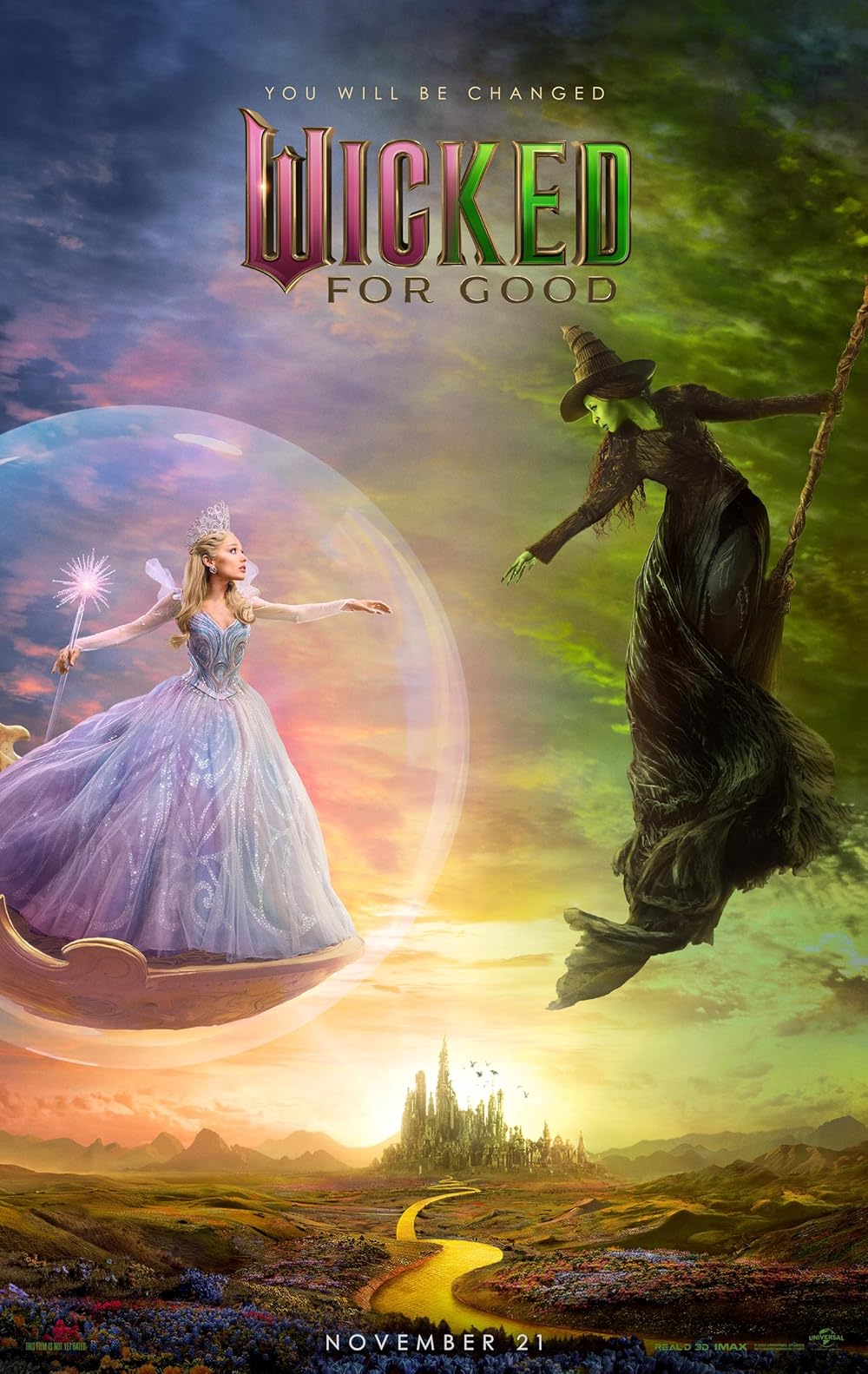
  • Wicked: For Good

    Well that was certainly a sequel to Wicked.

    Okay, look, I’m not trying to be mean to Wicked: For Good. I mean, yes the title is kind of dumb and completely undercuts what makes the song it is referencing clever. And yes that song is virtually the only good song in the second half of the musical, but you can hardly blame the movie for its source material, except insofar as it should not be slavishly devoted to it, but, I think creating new, better songs is more difficult to accomplish when you’re adapting a musical, versus just leaving out bad parts or creating new better parts when you’re adapting from some other medium.

    My point is, those caveats aside, I did like the first movie, and this has many of the strengths of that movie: lavishly beautiful sets that fulfill the promise of The Wizard of Oz 85 years later and fantastic main character chemistry, for examples. Of course, it is missing some strengths from the first movie as well, such as the aforementioned much less good music and 100% less Peter Dinklage.

    Honestly, the biggest problem is that you cannot really just watch the first one and then stop. Maybe in a row without a break, the flaws are less obvious? That is my hope.

  • The Mad Apprentice

    Learning that you can just search for stock at Half Price Books on the internet takes away pretty much all of the fun treasure hunting aspect of shopping at the bookstore, but at times like these when you don’t really want to just wait and see how long it will take to find a book and in the meantime your kid just completely forgets what happened last time, there is definitely something to be said for the gains in efficiency.

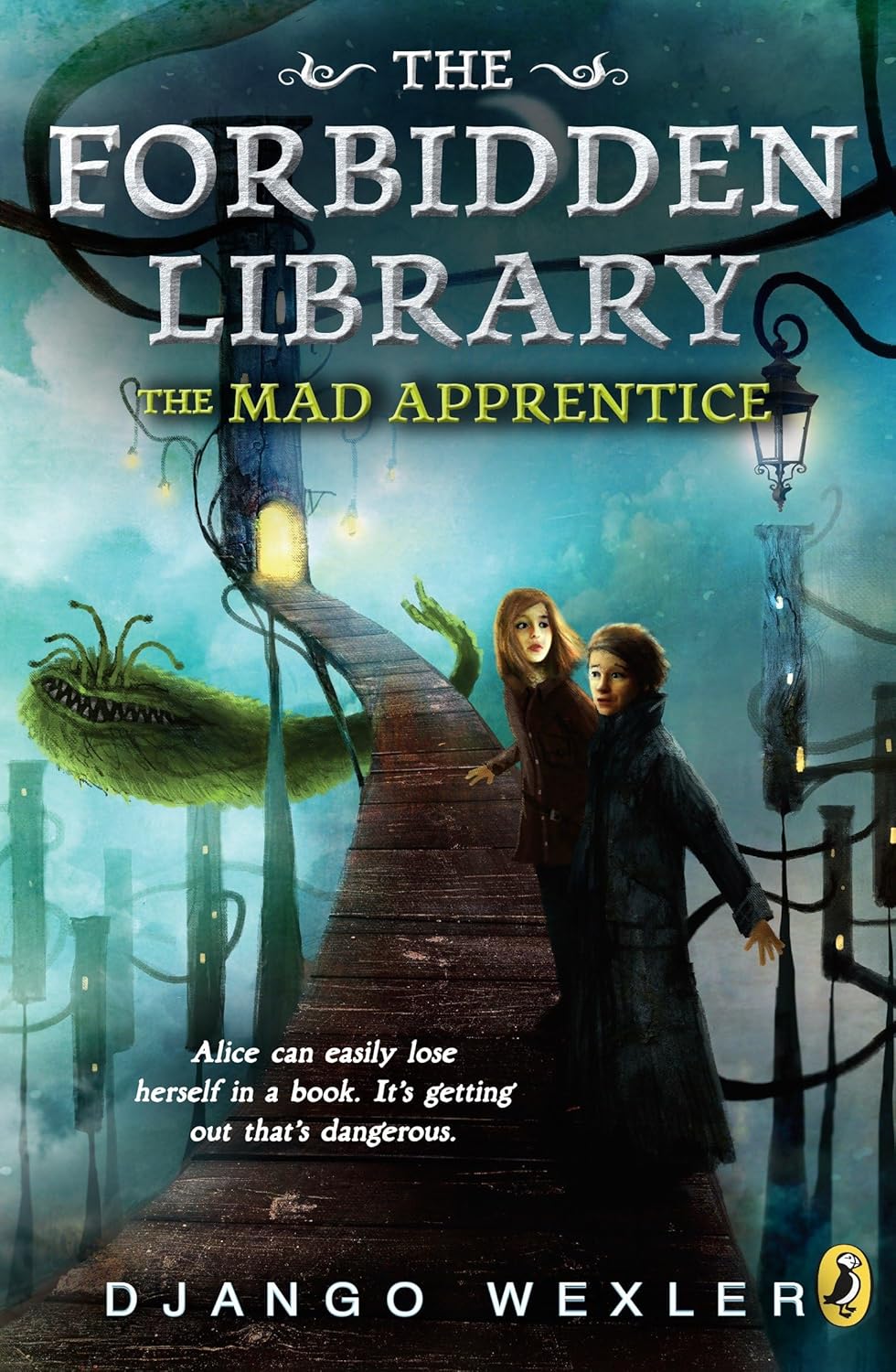
    Which is to say, I’ve read the second book in Django Wexler’s Forbidden Library series, The Mad Apprentice. And yes, okay, it’s a middle grade book about an orphan who discovers she is heir to a magical world but also maybe there’s a guy she wants to kiss even if the physical act of kissing has not crossed her mind as a literal fact yet, even after two full books. But also, I really kind of love the concept.

    1. All books have some capacity for magic, even if it’s just one perfect turn of phrase
    2. Some books are a lot more magical than that, and open portals between locations on earth or to distant real or imagined worlds
    3. Some books imprison creatures, and defeating the creatures within the book (or getting them to agree to serve you) gives you their powers, in a variety of possible ways
    4. The people who have this power, Readers, are kind of the bad guys if you think about it much at all

    Alice, the orphan I mentioned, has learned quite a bit about how to be a Reader, so now she’s ready to be thrust into their world due to an unexpected violent circumstance: the death of one of the Master Readers[1], and at the hands of his apprentice no less. Apparently, the other apprentices, in these circumstances[2], gather together and capture the offending apprentice and either deal with him themselves, or else bring him back for the justice of their masters. Which is how Alice finds herself in a group of four other apprentices as well as her friend(?) Isaac, hunting through a labyrinth that is slowly losing its magical power to a) perform whatever justice they decide but also to b) make sure none of the other apprentices loot any powerful book artifacts along the way. Because being able to trust the other people in your posse is way too much to ask, of course.

    But also, shouldn’t the labyrinth be a lot more bereft of power and a lot less dangerous than this, without anyone to maintain it?

    See what I mean? Good stuff.

    [1] She is an apprentice, and the apprentices call them the Old Readers, since among other things they’re basically immortal, and it makes you wonder why have an apprentice system if you don’t really intend to pass on your power at some point, but why ruin a great premise by poking perfect logic at it? But my point was, I think Master Reader fits better.
    [2] The fact that it happens often enough for there to be an accepted process is another reason to wonder why have an apprentice at all, but I said I wasn’t doing that.

  • City of Dragons

    I’ll start off by saying for the record that there will be spoilers for earlier books in here. Couldn’t be helped. So if you’re just here to know whether I like Robin Hobb’s third Rain Wilds book so you can decide via my oh so timely intervention whether you ought to read it for yourself, the answer is I do.

    As of Dragon Haven, all of the stunted, deformed dragons were successfully relocated. Also, the nice bird keepers really like each other, the musical elderling is having a rough time, the regular dragons remain completely self-absorbed, and that one guy from Bingtown who is a total dick is still a total dick. Thusly opens the second half of the series.

    City of Dragons is about two things, more or less. The first thing it is about is exploring Kelsingra. Why do the dragons ancestrally remember this city so fondly? Does the fact that Fitz came here once have any bearing on the plot? Too bad none of them can fly and get here, due to the implausible geography of a vastly wide river that is also constantly in flood, innit? (It’s to a lesser extent also about Thymara’s continued inability to come to grips with her sexuality. She’s still less annoying than Katniss, to be clear.)

    The second thing it’s about is the plot’s slow but inexorable progression towards… comeuppance? consequence? confluence? simple climax? Honestly, given the characters involved, I think all of these things apply. In short and with no important specifics, there are a lot of characters heading to Kelsingra. Tarman the liveship barge with supplies, for example, or Hest the trader’s son with perceived privilege.[1] And I think that of the many characters headed in that direction, very few of them have the slightest idea what they’re sailing into. And I think it’s going to be pretty explosive. (Mostly figuratively.)

    Of course, this kind of thing can be problematic, cf some of The Wheel of Time. So knowing the next book is the last one helps a lot towards not being extremely disappointed by a book that is more than half “moving pieces around the board”, as does my confidence that this is again the first half of a long book instead of actually two books, even if (happily!) the ending is a lot less abrupt than the first time it happened.

    [1] For reasons that make no sense if you have somehow read the previous books but not this one, his scenes were among my favorites.

  • How to Train Your Dragon (2025)

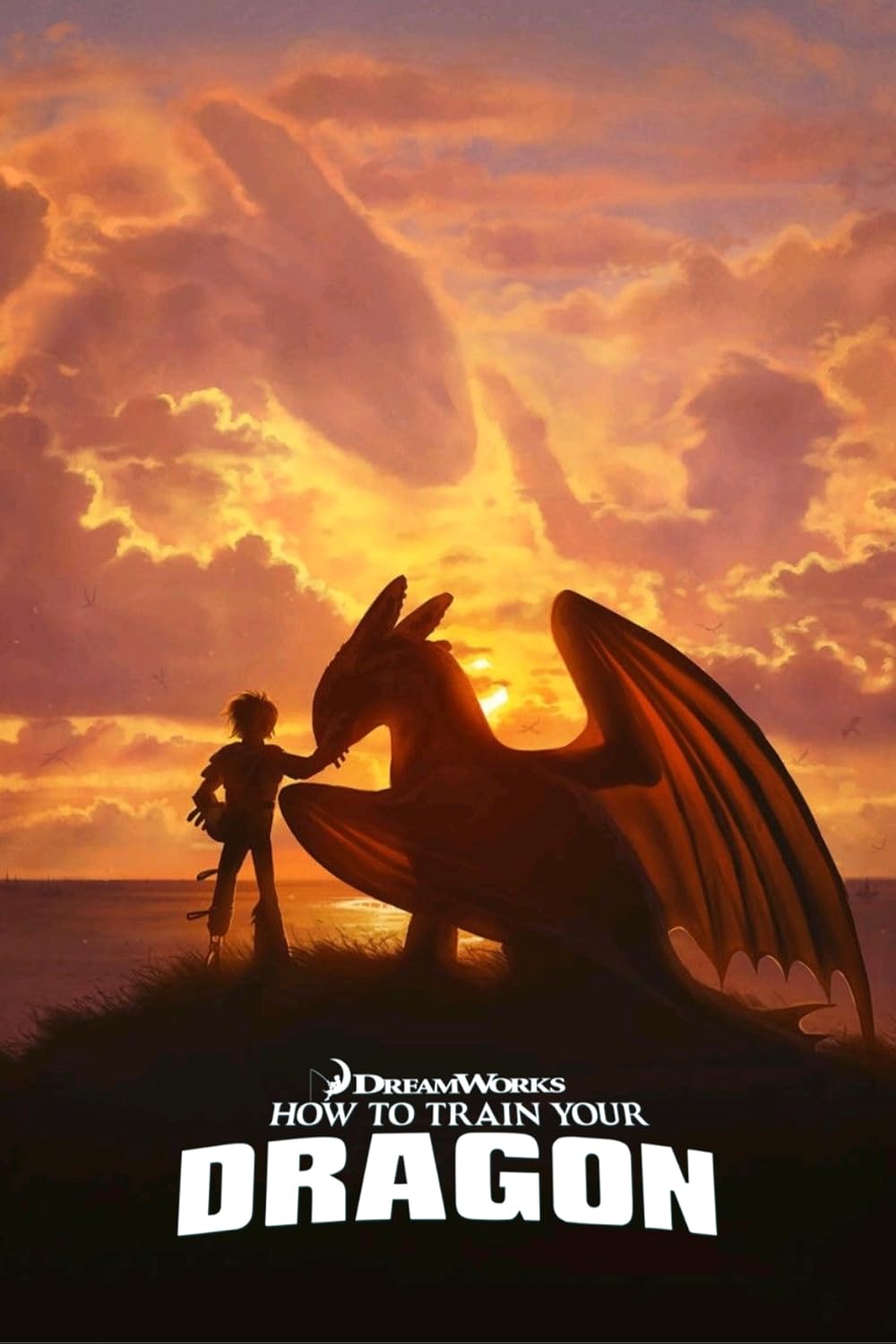
    So, remember when that one movie about training dragons came out? And then 15 years later, they did a live action remake?

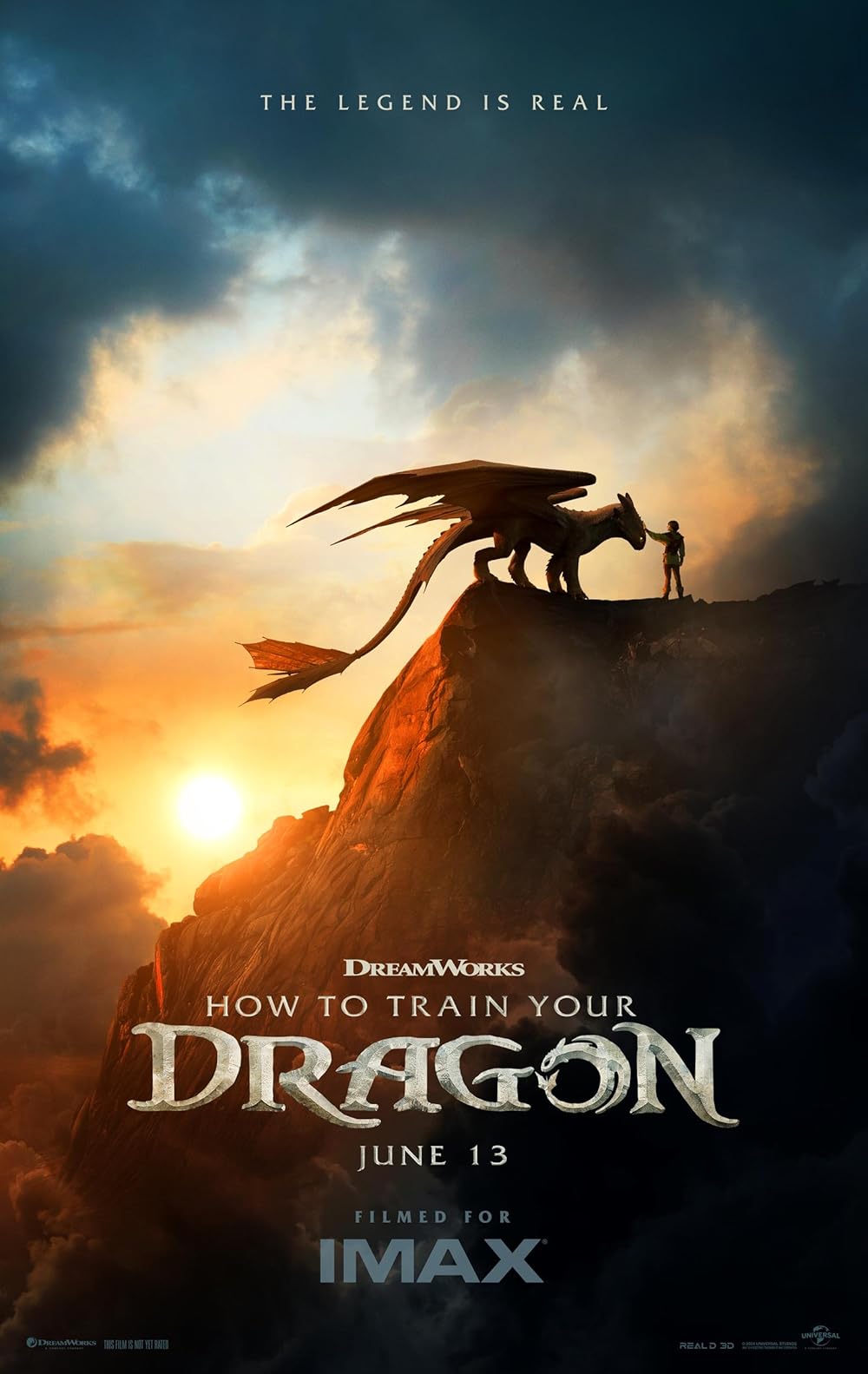
    Look, I don’t want to say this How to Train Your Dragon is a shot for shot remake of the animated feature, just with human actors in place of the animated voice actors. For one thing, the new one is longer.

    But… yeah, the truth is, it’s the same movie. And I already reviewed it once, so.

  • The Forbidden Library

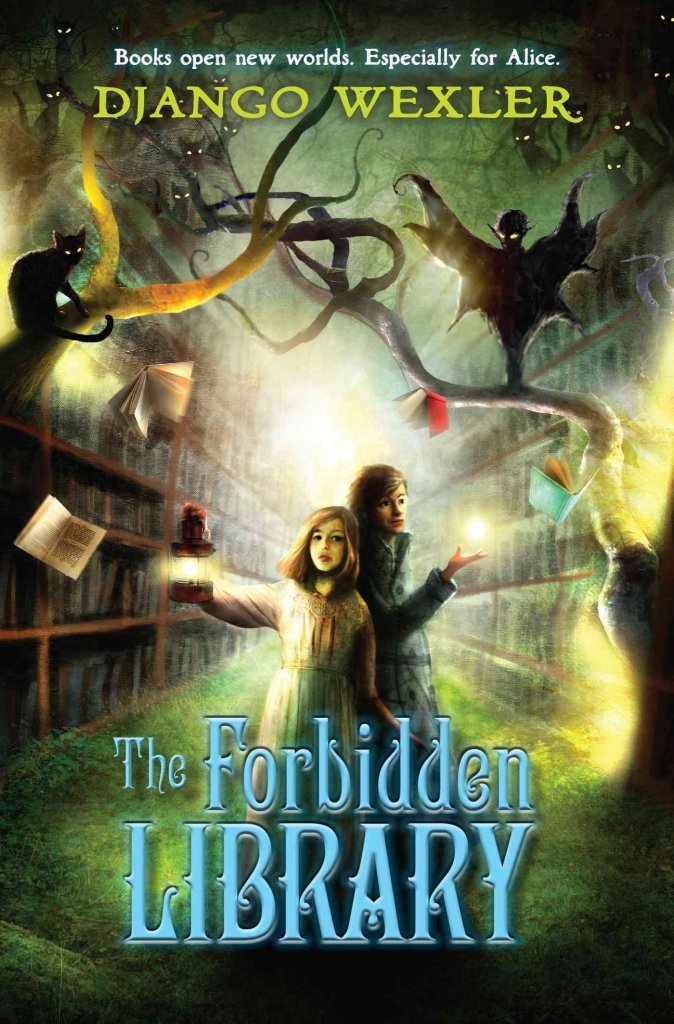
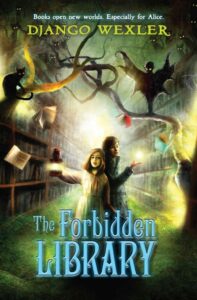
    I randomly found a Django Wexler book in the kid section of the library, which was a bit of a surprise. Turns out he wrote a YA series ten years ago, and since my son has a heck of an attention span for books, I took a chance. At usually a chapter a night, it took close to a month including one auto-renewal, but then again how fast do I read to myself?[1]

    Important ingredients for a young adult fantasy series are a) an orphan b) who was orphaned deliberately by an external force who will later drive the plot, and also c) the orphan later discovers an unanticipated talent for a magical world that they previously had no awareness of. Also, if you’re a girl orphan, probably d) you’ll meet someone your age in similar but not necessarily identical circumstances, who you most likely cannot trust, and yet you really want to. I’d say I’m not sure why this is less common with boy orphans, but the truth is, I’m pretty sure of why.

    Alice Creighton is an intelligent 12 year old girl living her best life (good at school, science, math, all of that) in Manhattan (I think) with her father at the height of the Great Depression (which does not really affect anyone in the story, they’re all rich here especially by the standards of the day), up until she learns fairies are real. A week later, her father is lost at sea and his estates are sold off to pay his debts, and she is the ward of her uncle Geryon, a man she had not previously known existed but who seems to be doing even better financially than her father had been (debts notwithstanding), what with his massive estate outside, I don’t know, Philadelphia maybe?[2]

    There’s only one rule: don’t go into Geryon’s personal library at the edge of the forest without permission. But when you’re surrounded by vague maids who do only what they’re told and literal-mindedly at that, and then just kind of wind down waiting for their next instruction, and with talking cats and evil wasp fairies and distant uncles who have no real interest in you, and above all when you are the protagonist of a YA novel who has been given one rule to follow, plus also you like to read?

    Well, I think we all know where this is going. (In case you do not: it’s going into The Forbidden Library.)

    [1] It’s the comics, is what it is. Well, and the parenting. The storytimes, just for example, most of which are regarding books that are unreviewable, such as Geronimo Stilton and Dragon Masters. And the Three Investigators, which I should have continued to review, but failed. (I’m not sure what happened there.)
    [2] If you’re wondering why I don’t know where anything happened, it’s because the cities are mentioned like once each at the beginning of the book and then never matter again. If everything happens at your massive country estate, who cares what state it’s in? Or nation, honestly.
  • Fairest Vol. 3: The Return of the Maharaja

    I don’t even know the last time I read a Fables-adjacent book, nor what it was[1]. And I’m not even sure how many books are left. I think not many? I should probably zerg rush the ending, but that would make it still months away. Just not years.

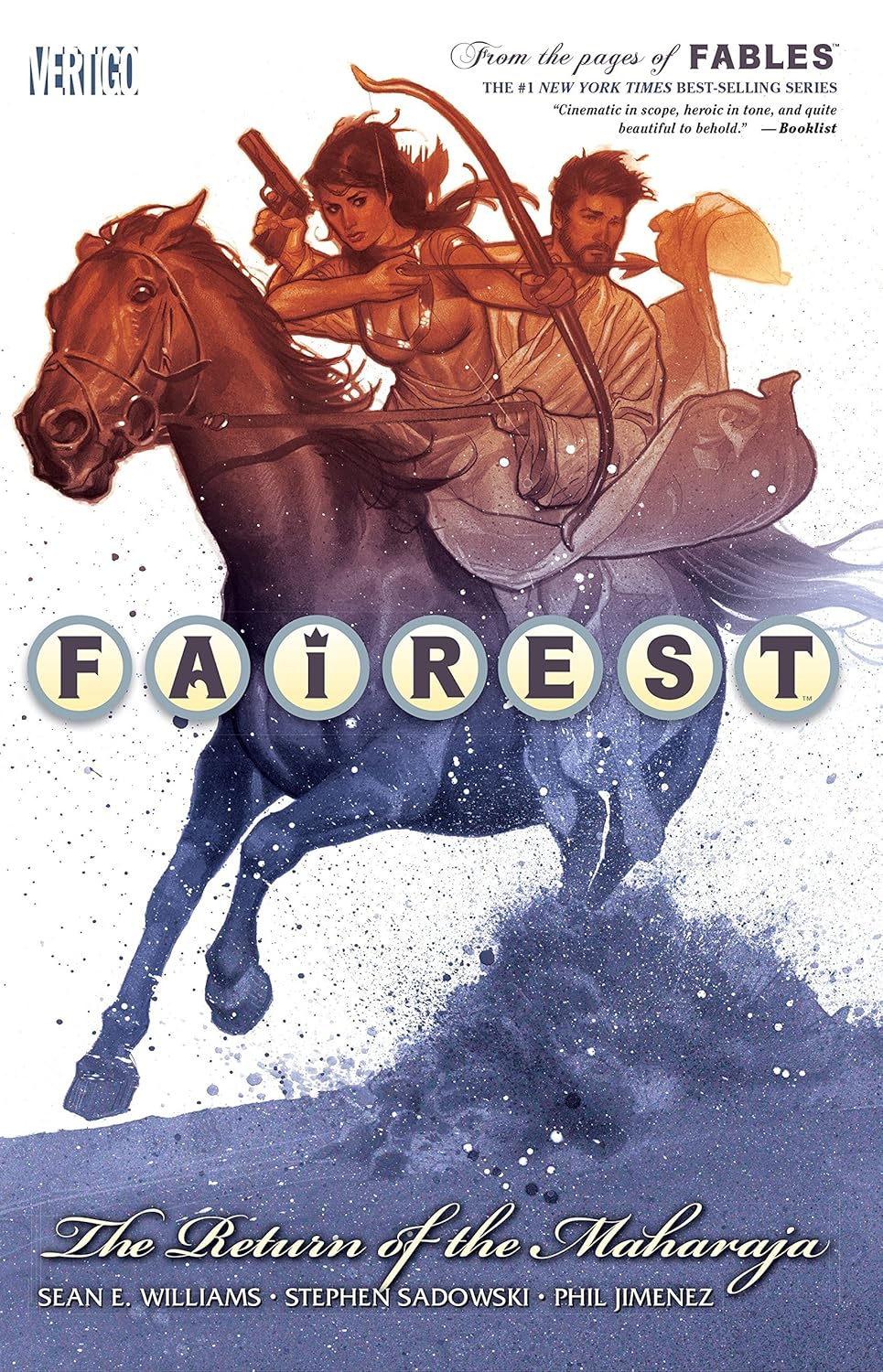
    In any event, this book was way way off in the periphery of the series. The land of Indus (think The Jungle Book) is no longer threatened by that one woodcutter’s evil empire, since it doesn’t really exist anymore. But all the villages and palaces and suchlike have been basically emptied of able-bodied men who went off to lose the war, leaving only the elderly, the infirm, the very young, the harems[2], and of course the [other] women.

    Which brings us to the main character, Nalayani, protector of her village from roving packs of dhole, which are wolf-adjacent animals from the Indian subcontinent. (I had heard of them before, but not with any commonality.) Anyway, she must now quest to the new maharaja I mentioned to ask for help with the problem, only to find herself embroiled in a civil war and with a pretty unlikely ally, at least if you remember previous events in the series, which I must admit I did not very well.

    I have no idea if I should know who Nalayani is as a fabled character? I definitely do not, which did not negatively impact my enjoyment of the story, and anyway there were other characters I did recognize. If the series wasn’t nearly over, I’d think big things were afoot in the main sequence as a result of this one. As it is… maybe this was a happy ending?

    [1] I mean, now that I’ve searched it and linked it, I maybe know. But I did not before.
    [2] If you happen to live in the maharaja’s palace, at least, and this I suppose explains the presence of the new maharaja, Shah Ah Ming.

  • Psycho Goreman

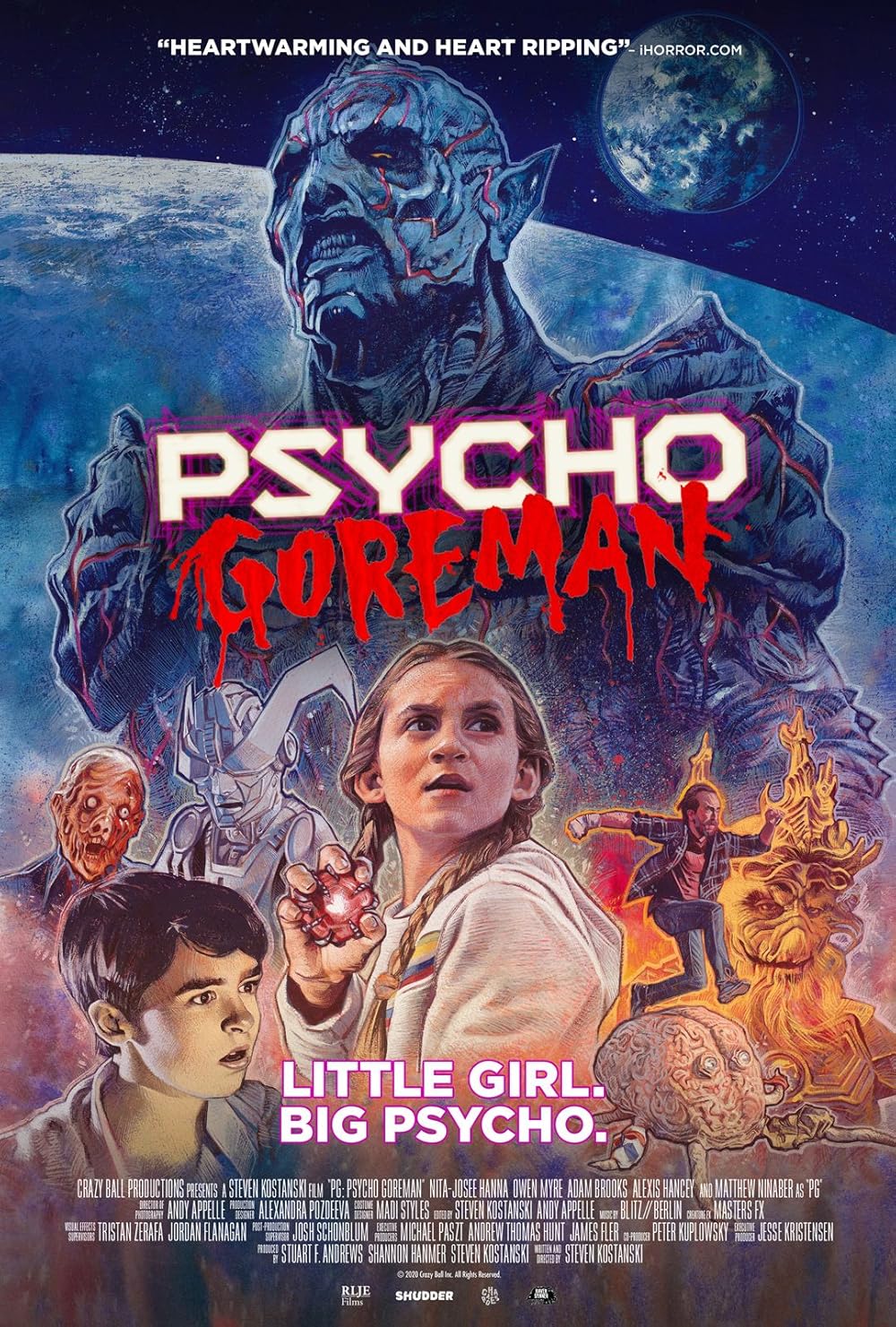
    You learn basically everything you need to know about Psycho Goreman[1] in the opening text crawl, when we learn that he comes from the planet Gigax. These are people who are definitely in a joking mood, and want you to be in on it. …for certain values of “you”.

    There are these two siblings, and the younger sister is abusive to the nebbish older brother. (10 and 7, maybe?) For example, in their regular game of crazy ball[2], if he wins he gets something pretty regular, I forget what because it was reasonable, while if she wins, he has to dig a hole and then bury himself in it. And of course he never wins.

    Anyway, in the course of digging the hole, they uncover the hidden burial site of an immortal dark power bent on galactic domination, and wacky hijinx ensue. It’s astonishing how close this comes to being a family-friendly movie[3]. You would have to change almost none of the plot, but man would you have to change a lot of the special effects.

    My point is, you shouldn’t watch it with your kids. Even if it does have a little bit of a lesson right at the end. You should watch it if you like gross-out horror comedy or were ever kind of a dweeb, and if you’re not allergic to children in movies.

    [1] PG for short, but since the movie is unrated, I guess they did not compromise on their artistic vision.
    [2] Dodgeball but with a Calvinball-influenced ruleset
    [3] There’s even a musical interlude in the middle, almost more of a music video, entitled Frig You. Which is a perfect encapsulation of how it’s almost family-friendly.

  • How to Train Your Dragon (2010)

    Fifteen years later, and also a remake, and I’m only just now seeing the original How to Train Your Dragon. In fact, it’s because of the remake. There are new toys, and my kids like dragons, so they have the new toys, which begged the question, shouldn’t they know what’s the deal with these toys? And Bob’s your uncle.

    The plot twist [that I’ve already revealed] being, shouldn’t I know what’s the deal with these toys? Which brings me to a fun fact, in which I can objectively prove that previews are getting worse. I did not learn until 2025 that the dragons were nominally the bad guys of the movie. I always took it straightforwardly that the loser kid who never fit in found a way to be awesome via dragon training, not that he was supposed to be dragon killing this whole time! And I mean, it’s not really a spoiler for the movie, since you learn it during the opening scene narration. But I thought it was a clever subversion of the original previews’ expectations, and now the current previews are all, we cannot subvert anything, as our audience is dumber than ever. Or something like that. My point is, fuck[1] screw previews.

    Anyway.

    So there’s this Viking kid who is scrawny and engineering-minded, instead of being large and strong and (let’s say) single-minded. Which means he doesn’t fit in. Oh, sure, he still wants to kill dragons, same as everybody else, he just wants to use tools instead of muscles to do it. What a maroon! But once he actually manages to use said tools to get a dragon in a position where he can kill it, he… comes up with a new plan.

    This is a kid movie, so the result of the new plan is that he ends up fitting in after all, and everyone learns a valuable lesson about accepting people for who they are. And, okay, as a parent, that’s a good lesson. Also, as a parent, I recognize that sometimes it’s a lesson parents need to learn as much as kids do. But the real point is, the actual plot underlying these lessons is at least halfway decent as well. Plus, riding around on a dragon is cool. I would not, I think, affirmatively recommend this movie to anyone unless you really like dragons and can live with kid movies, but I would not disrecommend the movie to anyone, if they were about to be in front of it. Because, you know, it’s fun!

    [1] Family movie, I should watch my language.

  • A Plague Tale: Requiem

    A couple of years ago [let’s say], I played a game set in medieval France wherein a teen sister and young brother are on the run from deadly swarms of rats and the Church, because of alchemists. The sequel, A Plague Tale: Requiem, picks up some short time later, with the reminder that. yep, younger brother Hugo’s affliction is not resolved.

    Except for the plot, this is basically the same game, so don’t come looking for innovations. The sling is still pretty cool as weapons in games go, and the mechanic for creating and removing light as a means of progressing under various circumstances is a clever one that never got old. As far as the plot, though… I guess the best way to look at it is as a fantastical re-imagining of the Black Plague, and to then not be surprised, in either this or the previous game, when just absolutely loads of people die. Inevitably, some of them are people you care about.

    The goal of the game is to cure Hugo, whether via alchemist or following his dreams[1] or delving into the history of previous small children who have been afflicted with the Macula, a word which may have some meaning outside of this game that I have not researched, but probably doesn’t[2]. There are, as you might expect, lots of soldiers stalking around, lots of rats, lots of nooks and crannies to find secret story beats for completionist achievements, and a few too many “trapped with multiple waves of enemies” scenarios for my personal tastes, but on the other hand, I did finish the game, so.

    It wanted me to play again on highest difficulty but with all my unlocked abilities. I will not be doing that, but I can imagine past me, with access to many fewer games, giving it a go.

    [1] I mean, dreams he is having when sleeping, not like dark ages self-actualization.
    [2] It turns out to be a part of the retina, which seems completely unrelated to anything in the game. Beats me!

  • Kanashimi no Beradonna

    I’m again a long time between episodes of my nominally weekly horror podcast, partly due to difficulty finding a copy of the current movie that I could watch, but I think mostly due to being sick for the greater part of a month and falling behind on podcasts in general. I know one of the categories was revenge, but I don’t remember if that was the style or the monster, and I cannot remember what the other category was at all. (One supposes if I could, I’d also know which was which.) But I think revenge must be the monster die. Style could be a lot of things, but this is a 1973 anime named Belladonna of Sadness, so one supposes the style was Asian, or animated films, or not very plausibly 1970s. Just because of the glut of revenge movies from that decade, I mean.

    Of course, I could be wrong about any of these facts, aside from what the movie was I mean. I’d check, but I’ve written way too much for that to make sense at this point.

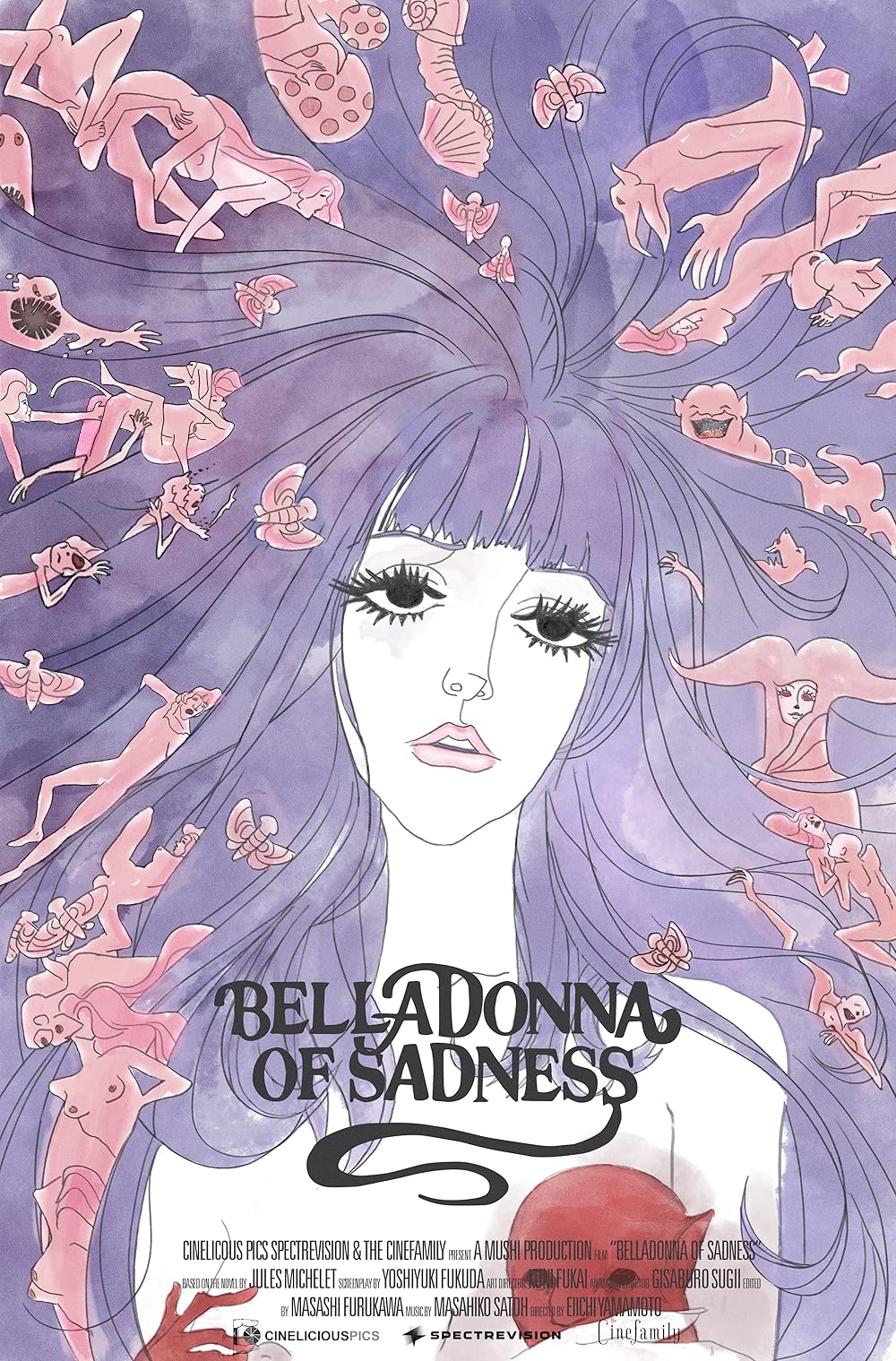
    There was a movie, I was saying. If I’m being real, I have no way to usefully talk about this movie without massive spoilers. Here’s what I can say before I reach that line: Belladonna of Sadness is a wildly stylized and yet minimally animated[1] movie about a medieval European, probably French, village in which a very much in love couple gets married, like you do, but then nothing whatsoever goes well for them for the remainder of the flick.

    Okay, I’m not going to explain the plot point by point, because for one thing I don’t think I could anyway, but either way, definitely spoilers from here on in. Cut below the footnote.

    [1] In the sense that there isn’t a lot of animation. There’s a lot of art, which the camera pans across, and sometimes small pieces of the art move in small ways. And sometimes it goes crazy. But mostly: very minimalist, from an animated perspective.

    (more…)