Monthly Archives: March 2026

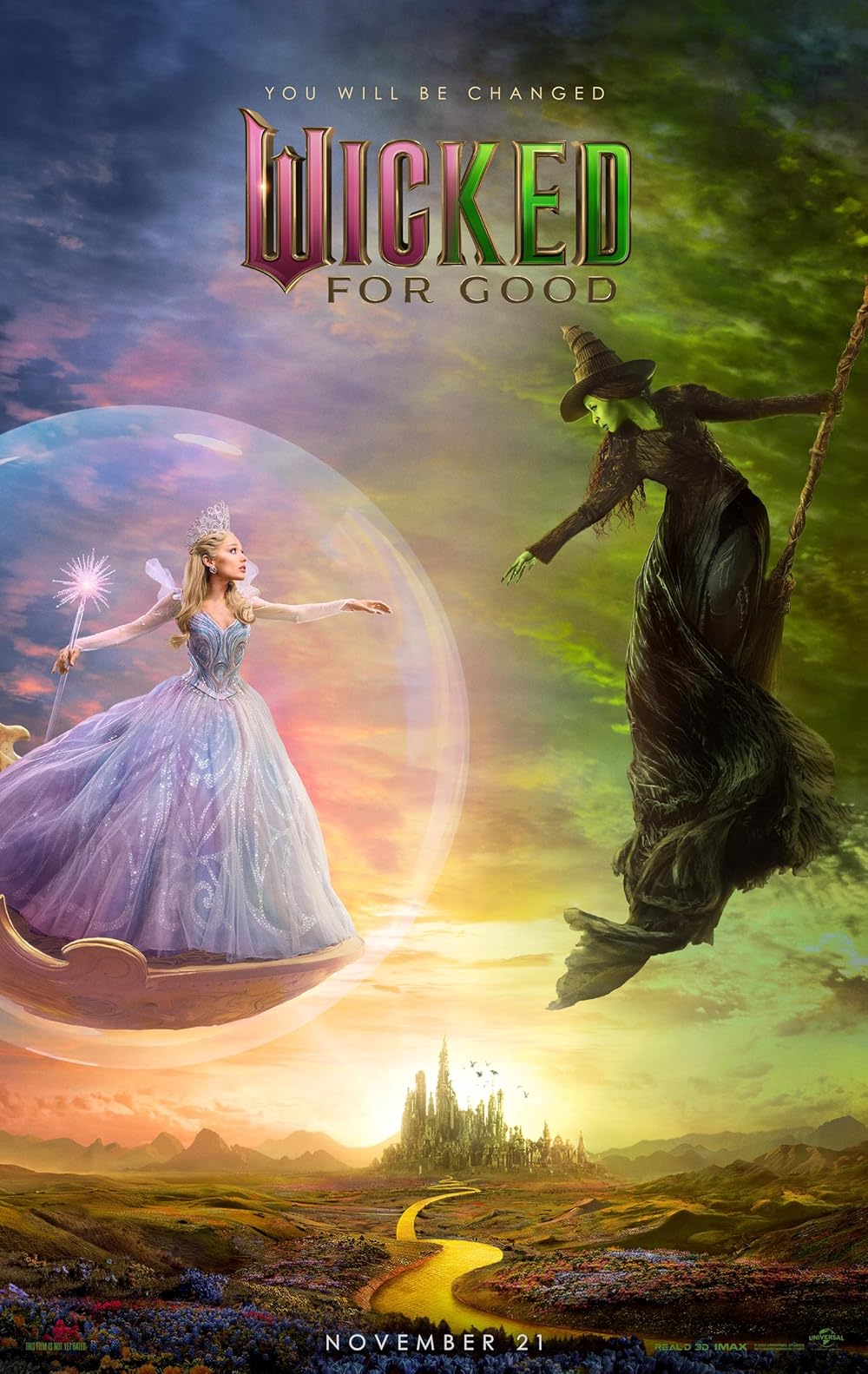
Wicked: For Good

Well that was certainly a sequel to Wicked.

Okay, look, I’m not trying to be mean to Wicked: For Good. I mean, yes the title is kind of dumb and completely undercuts what makes the song it is referencing clever. And yes that song is virtually the only good song in the second half of the musical, but you can hardly blame the movie for its source material, except insofar as it should not be slavishly devoted to it, but, I think creating new, better songs is more difficult to accomplish when you’re adapting a musical, versus just leaving out bad parts or creating new better parts when you’re adapting from some other medium.

My point is, those caveats aside, I did like the first movie, and this has many of the strengths of that movie: lavishly beautiful sets that fulfill the promise of The Wizard of Oz 85 years later and fantastic main character chemistry, for examples. Of course, it is missing some strengths from the first movie as well, such as the aforementioned much less good music and 100% less Peter Dinklage.

Honestly, the biggest problem is that you cannot really just watch the first one and then stop. Maybe in a row without a break, the flaws are less obvious? That is my hope.

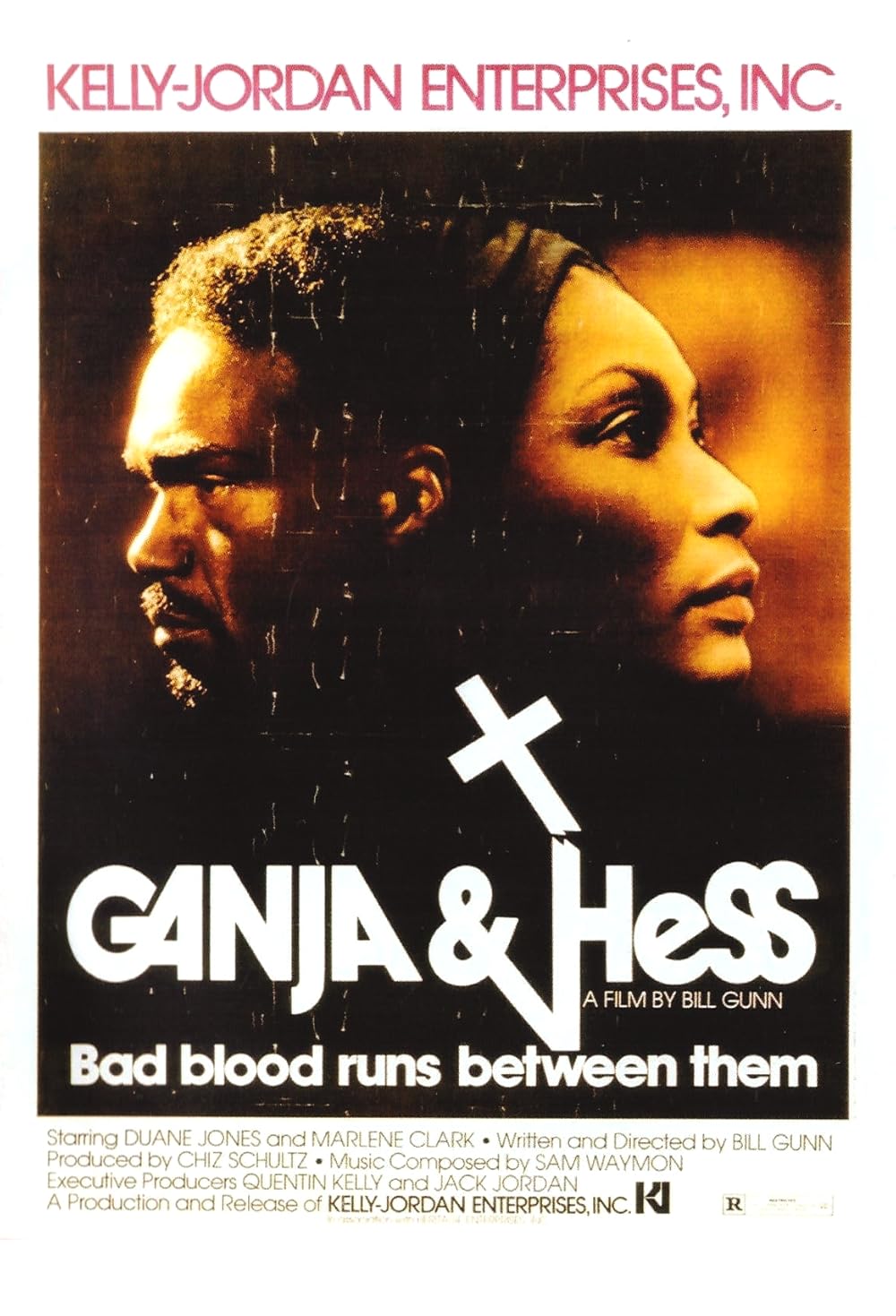
Ganja & Hess

So here’s a movie I’ve one hundred percent never heard of, and starring Duane Jones from Night of the Living Dead. So at least he got to be in another movie. And frequently full frontal whangdoodle a-flopping in another movie, at that. Good for you, Ben!

The podcast people got to Ganja & Hess through a scare of vampires and a style of arthouse. The vampire part may not be strictly speaking accurate, but boy howdy the arthouse part is. So there’s this doctor named Hess, who if I understood correctly is an MD with an interest in a lost African civilization, though it would make more sense if he’s like an anthropology PhD since I never saw him do any medical stuff that I can recall. Anyway, before the movie starts, he is stabbed by someone with a dagger from this civilization that he’s investigating, and gets infected via the dagger with the civilization’s craving for blood.

I am now going to proceed to spoil the hell out of this movie, in part because I’m not convinced I actually know what happened and in part because even if I do, I’m not sure plot spoilers really affect whatever the point was. Still, if you want me not to do that, this is your exit ramp.

Continue reading

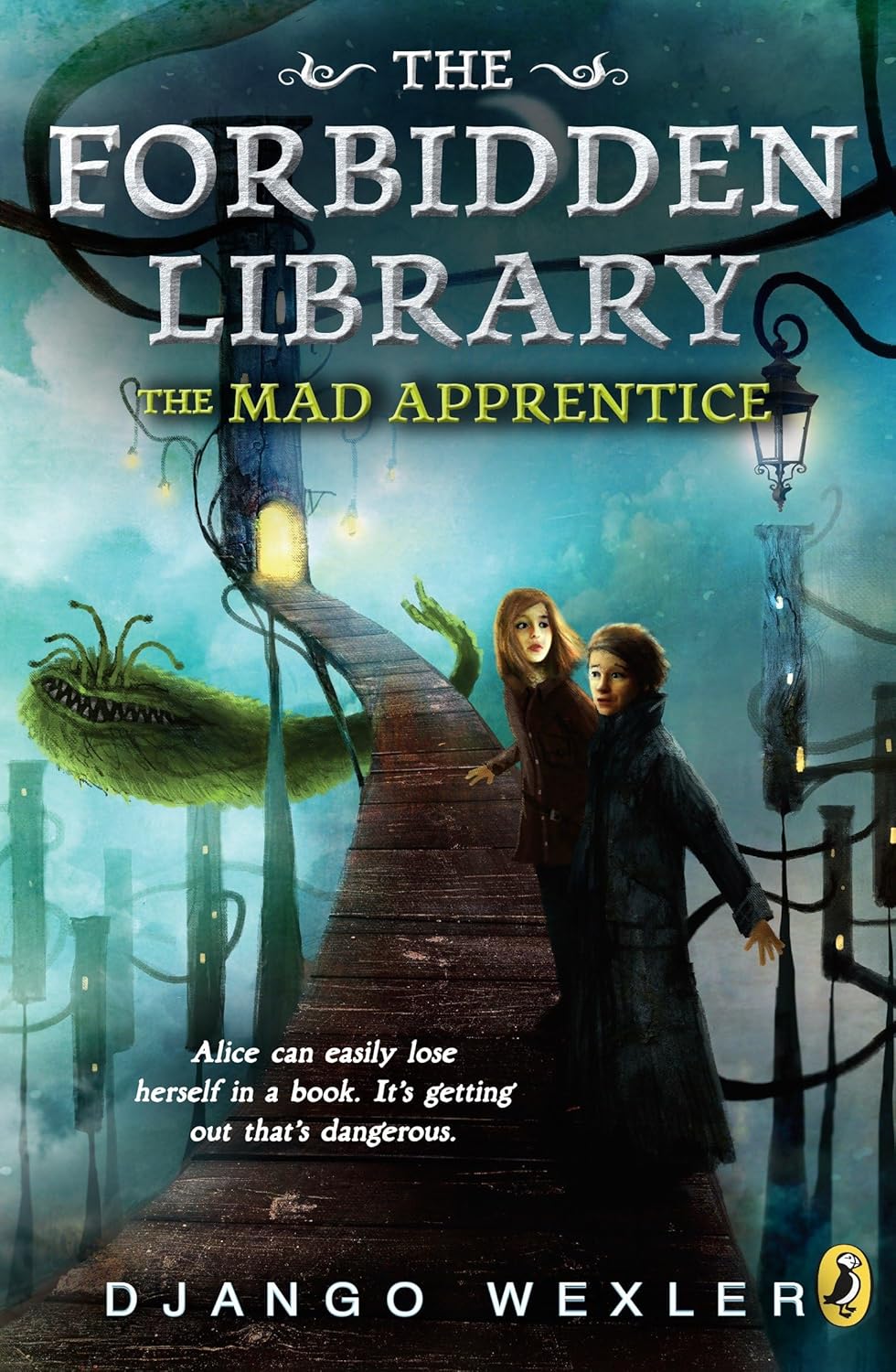
The Mad Apprentice

Learning that you can just search for stock at Half Price Books on the internet takes away pretty much all of the fun treasure hunting aspect of shopping at the bookstore, but at times like these when you don’t really want to just wait and see how long it will take to find a book and in the meantime your kid just completely forgets what happened last time, there is definitely something to be said for the gains in efficiency.

Which is to say, I’ve read the second book in Django Wexler’s Forbidden Library series, The Mad Apprentice. And yes, okay, it’s a middle grade book about an orphan who discovers she is heir to a magical world but also maybe there’s a guy she wants to kiss even if the physical act of kissing has not crossed her mind as a literal fact yet, even after two full books. But also, I really kind of love the concept.

  1. All books have some capacity for magic, even if it’s just one perfect turn of phrase
  2. Some books are a lot more magical than that, and open portals between locations on earth or to distant real or imagined worlds
  3. Some books imprison creatures, and defeating the creatures within the book (or getting them to agree to serve you) gives you their powers, in a variety of possible ways
  4. The people who have this power, Readers, are kind of the bad guys if you think about it much at all

Alice, the orphan I mentioned, has learned quite a bit about how to be a Reader, so now she’s ready to be thrust into their world due to an unexpected violent circumstance: the death of one of the Master Readers[1], and at the hands of his apprentice no less. Apparently, the other apprentices, in these circumstances[2], gather together and capture the offending apprentice and either deal with him themselves, or else bring him back for the justice of their masters. Which is how Alice finds herself in a group of four other apprentices as well as her friend(?) Isaac, hunting through a labyrinth that is slowly losing its magical power to a) perform whatever justice they decide but also to b) make sure none of the other apprentices loot any powerful book artifacts along the way. Because being able to trust the other people in your posse is way too much to ask, of course.

But also, shouldn’t the labyrinth be a lot more bereft of power and a lot less dangerous than this, without anyone to maintain it?

See what I mean? Good stuff.

[1] She is an apprentice, and the apprentices call them the Old Readers, since among other things they’re basically immortal, and it makes you wonder why have an apprentice system if you don’t really intend to pass on your power at some point, but why ruin a great premise by poking perfect logic at it? But my point was, I think Master Reader fits better.
[2] The fact that it happens often enough for there to be an accepted process is another reason to wonder why have an apprentice at all, but I said I wasn’t doing that.

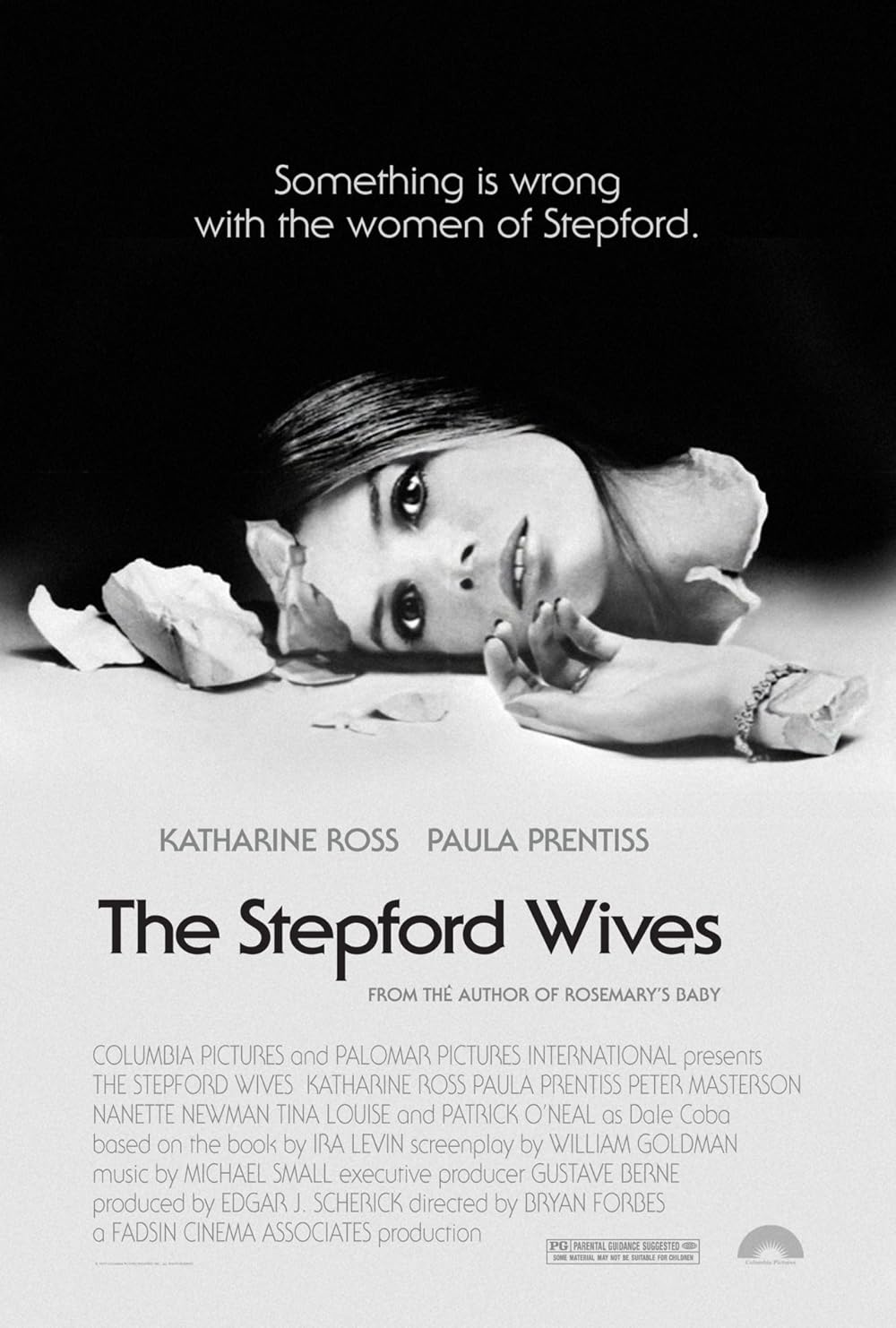
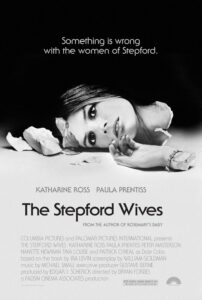
The Stepford Wives (1975)

I’ve reached the point of downloading a new free streaming service because it was 1080p and all the others are 720p.[1] And The Stepford Wives still looked pretty bad. Man, I should have turned to the digital archivists.

Like most things in the past month or so, this is for my podcast, which continues its streak of movies I’ve never seen. I think society was the scare? And 1970s was probably the style? Man, I wish I could remember anything just lately. (Last night, I could not remember the word for “coaster”, as in the thing you put your glass on to protect the table. But it’s okay: the girl, who is three, spotted me.)

NOTE: This review assumes not that you’ve seen the movie, but that you are aware of its place in the cultural zeitgeist. If you are coming in blind… go watch it instead of reading this. It’s worth a look!

Anyway. This movie is as old as I am, and while I’ve never seen it obviously, I’ve long known that its text deals with feminism. That is, with how men of the time[2] really didn’t like the idea of women having lives or interests of their own, vs just being available for cleaning and sex. And maybe parenting I guess? I think I always thought it was a brainwashing movie, but it turns out to be something else.

But my point was, Joanna’s rising horror as she realizes that the women of Stepford are not actualized humans, and that those who remain are changing too: the reason why this is happening is the text of the movie. My claim is that there’s a subtext as well, and it is about fear of the suburbs, where every person is the same, every conversation is the same, nothing ever happens, nothing ever changes, and worst of all, living there is to tacitly agree that all of these things are the things you want. You used to be cool and hip and have a camera through which you reflected back to the world its inherent artistry. Now you have backyard barbecues and a husband at the country club playing golf or something. …I admit, “or something” is doing a lot of heavy lifting in this particular instance.

Best to go back to the city, where okay you may be murdered at any moment and people just carry inflated sex dolls down the street in broad daylight, but at least you’re not dead inside.

But also: it’s honestly a pretty scary movie for all that it has virtually no violence of any kind. Creeping dread is real, y’all.

[1] Of course I would watch it without commercials on a paid service if that had been an option. But it was not, alas.
[2] I’m not saying things are perfect today, but I think they’re better than the above description.
[3] Apropos of nothing, but the script was written by William Goldman, of Princess Bride fame. Bro had range!
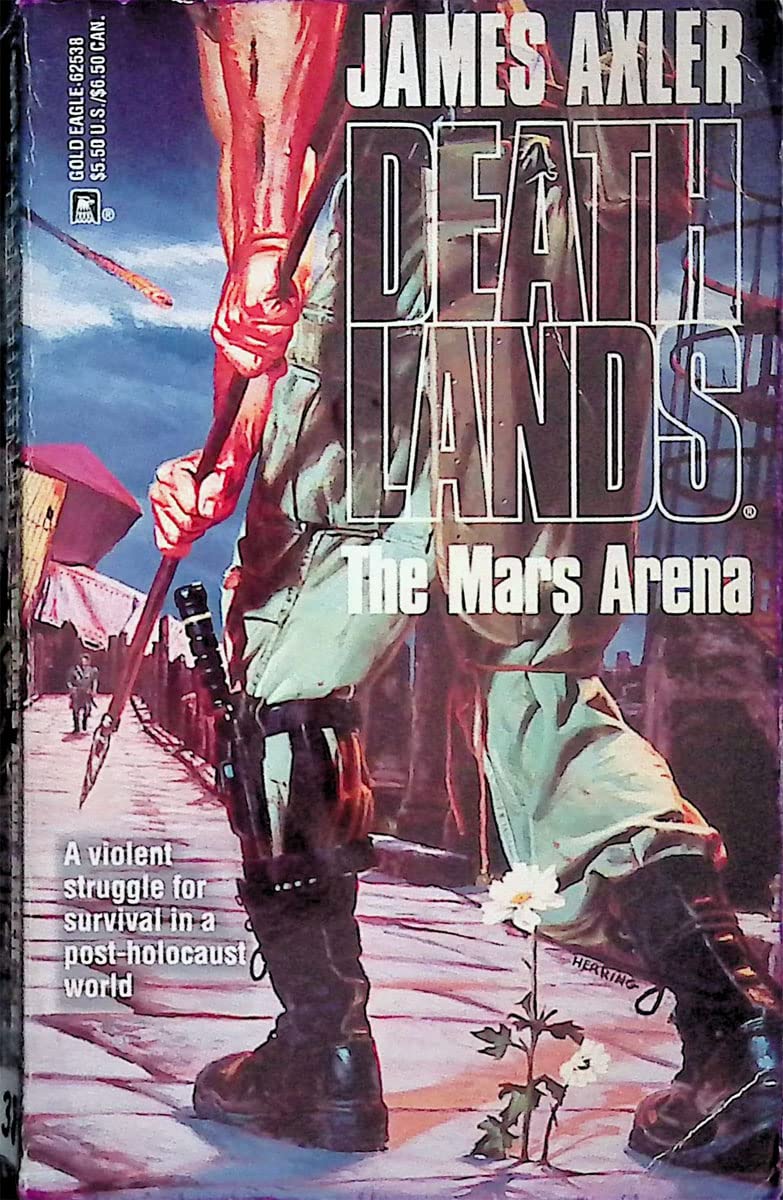
The Mars Arena

I think the hardest part about seeing Laurence James fall off of the Deathlands series is that the books are no longer reliably sci-fi genred. In The Mars Arena, for example, the book starts days after they last teleported from / to anywhere[1], on the run from a local gang who vastly outnumbers them, and ends with no redoubts or mat trans units anywhere in sight.

After a subplot with a scientific community in Montana come to see a falling satellite goes nowhere[2], our intrepid heroes are kidnapped into a Hunger Games style tournament in Las Vegas, as proxies for a bunch of west coast barons[3] who are in competition to see who’s in charge for the next year. As, unexpectedly, is someone near and dear yet recently absent from their group. Not, of course, on the same team though. That’d be way too easy.

The thing is, the propulsive plotting, side characters, constant air of betrayal, scary mutant monsters? All of that is still present, and still works well. But these new authors have lost a lot of the thread of the characters, such that they’re sort of becoming one note caricatures[4]. I still don’t have the data to really know much, but I’m guessing different authors have a better grasp on some of the threads than others? For sure, nobody has the whole picture except the original guy, and he died 26 years ago. Well, or maybe me. But I’m not sure what I can do about it at this remove, you know?

[1] Like, I don’t even remember how the last one ended. Were they likely to teleport anytime soon? The tightly connected narrative between each book is the thing I miss third most, though I suppose this is directly related to how a lot of different people are writing these in a random order instead of one person all in a row. Obviously you could make sure of the continuity, but who wants to waste their time on a low rent men’s adventure series? (Clearly not the people at Gold Eagle who had no idea what makes this series great.)
[2] Yet? I wish I had faith on that point.
[3] Perhaps a precursor to how things are in the Outlanders series? As I said, I’ll be watching for these little connections.
[4] The characterizations of the main people[5] being consistent is what I miss second-most about the series. Well, that and the underlying feminist egalitarianism among the group. That part is gone less often than consistent characterization, but I think in a very real way the failure points are coming from the same place. Wrong character actions are how you lose that kind of thing.
[5] So far, still JB Dix and Doc are hardest hit. Jak was always sort of one note in the first place, at least before and after his family stuff happened, Mildred has done okay for whatever reason, and Ryan and Kristy as the two mainest characters have of course been treated best by the continuity fairies. But still not always perfect.